
Cross stitch patterns for beginners
Counted cross stitch is one stitch, repeated. An X over one square of cloth, a few hundred times. There is nothing else to learn — and if a pattern asks you for backstitch, half stitches or french knots, it is the pattern adding the difficulty, not the craft.
This page covers how to read a chart, what to buy, and which pattern to start with. Everything in this shop is whole cross stitch only, so you can begin anywhere in it.
What you need, and nothing more
| Item | What to get | Why |
|---|---|---|
| Cloth | 14-count aida, 12×12 inches | Fourteen squares to the inch is the largest most shops stock, and the easiest to see |
| Floss | One DMC skein per colour in the key | The key lists the numbers and the skein counts; it is almost always one each |
| Needle | Size 24 tapestry needle | Blunt, so it parts the weave instead of piercing it |
| Hoop | 10-inch wooden or plastic | Keeps the tension even, which is most of what makes stitches look neat |
| Scissors | Small embroidery scissors | A clean cut stops the floss fraying as you thread it |
No frame, no stand, no lightbox, no magnifier. Those are for people who already know they like this.
Reading the chart
A counted chart is a grid where one square means one stitch. The square tells you the colour; the symbol printed in it tells you which DMC number that colour is, so the chart still works photocopied or printed in black and white. Heavy rules every ten squares let you count in tens. Arrows on the edges mark the centre.
- 1
Find the centre
Fold the cloth in half both ways and crease it. The chart marks its own centre with arrows. Starting in the middle means a miscount costs you a corner, not the whole piece.
- 2
Separate the floss
A skein is six strands. Pull out two and use those — two over one on 14-count is what every chart here assumes. Six strands at once is the commonest beginner mistake and it looks lumpy.
- 3
Work one colour at a time
Pick a block ten squares wide, do every square of one colour in it, then move to the next colour. Chasing the picture around the cloth is how you lose your place.
- 4
Leave the background bare
The floss key names the commonest shade in the chart. Buy aida in that colour and those squares need no stitching at all — often a third of the work, gone.
What makes a pattern hard
Not the size. Four things, in roughly this order:
- Confetti. Lone stitches with no neighbour of their colour. Each one is a rethread for a single square, and a chart full of them takes three times as long as its stitch count suggests. This is the single biggest difference between a pleasant chart and a miserable one.
- Colour count. More shades means more thread changes and more places to lose your place. Eight is comfortable; forty is a project.
- Fractional stitches and backstitch. A second and third technique bolted onto the first.
- Full coverage. A chart that stitches every square, background included, is several times the work of one that leaves the cloth showing.
Every chart in this shop is cleaned of confetti, uses whole stitches only, and leaves the background as bare cloth. Which leaves colour count as the only real variable — and it is what the shortlist below is sorted by.
The easiest charts in the shop
All 472 patterns are 130 stitches square and whole cross stitch only. These eight have the fewest colours, which makes them the least work — so they are where to start.
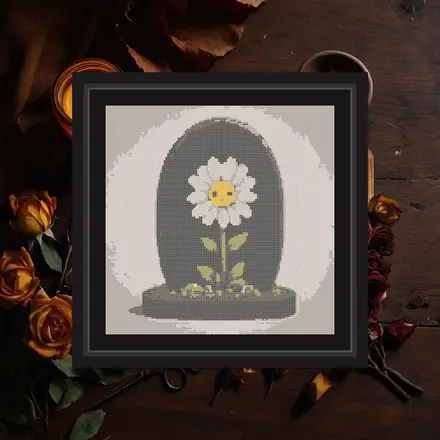
Little Headstone
Little Headstone — 8 colours, whole cross stitch only
$6.00 · Standard · 130×130 · 8 colours
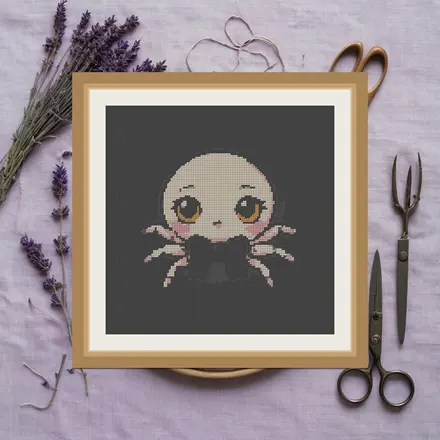
Spider Bow
Spider Bow — 10 colours, whole cross stitch only
$6.00 · Standard · 130×130 · 10 colours
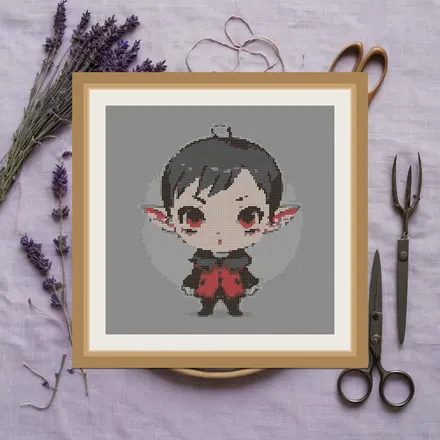
Tiny Vampire
Tiny Vampire — 10 colours, whole cross stitch only
$6.00 · Standard · 130×130 · 10 colours
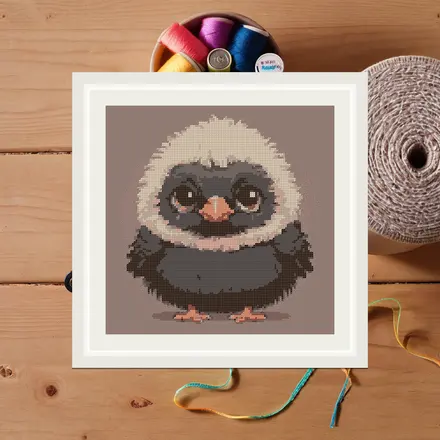
Crow Chick
Crow Chick — 10 colours, whole cross stitch only
$6.00 · Standard · 130×130 · 10 colours
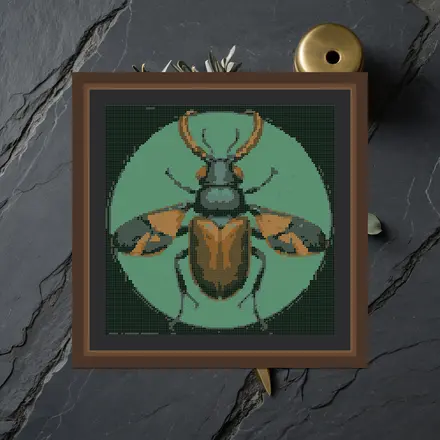
Stag Beetle Plate
Stag Beetle Plate — 10 colours, whole cross stitch only
$6.00 · Standard · 130×130 · 10 colours
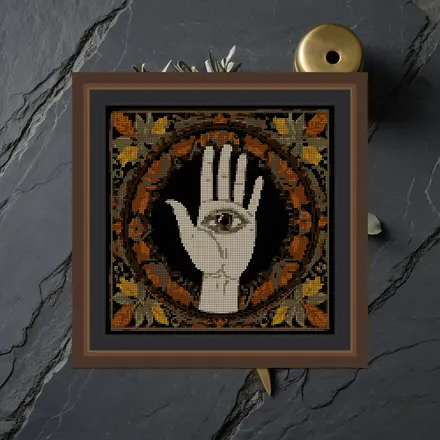
Hand Of Protection
Hand Of Protection — 10 colours, whole cross stitch only
$6.00 · Standard · 130×130 · 10 colours
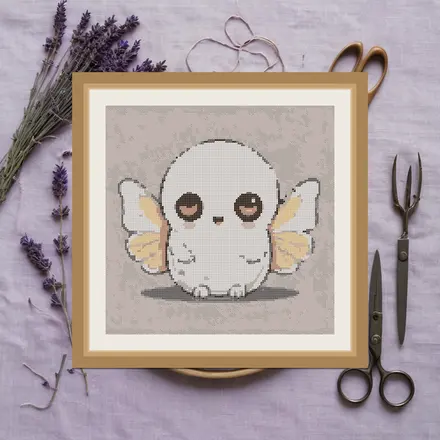
Ghost And Moth
Ghost And Moth — 10 colours, whole cross stitch only
$6.00 · Standard · 130×130 · 10 colours
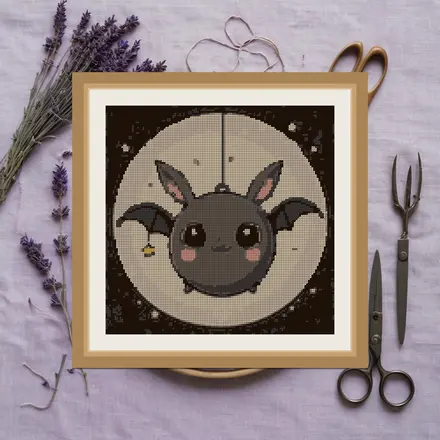
Bat And Star
Bat And Star — 10 colours, whole cross stitch only
$6.00 · Standard · 130×130 · 10 colours
Questions
- How do you read a cross stitch pattern?
- The chart is a grid, and one square is one stitch. Each square carries a colour and a printed symbol, and the floss key tells you which DMC shade that symbol means. Heavy lines every ten squares are there so you can count in tens instead of ones. You are not reading left to right like text — you pick a starting point, usually the centre, and work outwards block by block.
- What do I need to buy to start cross stitching?
- Aida cloth, floss, a needle and a hoop. 14-count aida is the usual starting point: fourteen squares to the inch, big enough to see. A size 24 tapestry needle, a 10-inch hoop, and one skein of each colour in the key — the key says how many you need, and it is almost always one. Embroidery scissors help. That is the whole list.
- What does 14-count aida mean?
- The number of squares per inch of cloth. Higher count means smaller squares and a smaller finished piece from the same chart. A 130-stitch chart finishes at about 9¼ inches on 14-count, 8¼ on 16-count and 7¼ on 18-count. Every PDF here lists all three on the cover, so you can buy cloth knowing what you will end up with.
- Should a beginner avoid backstitch and fractional stitches?
- It is one less thing to learn, yes. Backstitch is an outline sewn on afterwards in a different technique; quarter and three-quarter stitches mean splitting a square. Both are perfectly learnable and neither appears in any pattern in this shop — every chart is whole cross stitch only, one X per square, start to finish.
- What is confetti, and why does it matter?
- Confetti is a single stitch of a colour with no neighbour of the same colour — one orange square alone in a field of grey. They are what make a chart tedious, because each one costs a rethread for one stitch. Charts drawn from photographs are usually full of them. Every chart here is cleaned of them before it ships, which is why they stitch faster than the stitch count suggests.
- How long does a cross stitch pattern take?
- A rough rule is that a confident stitcher does somewhere around 150 to 250 stitches an hour once they have the rhythm, and rather fewer at first. A 130-stitch-square chart is about 17,000 squares if it were solid — but these are not solid, the background is left as bare cloth, so the real figure is a fraction of that. Expect a few evenings, not a few months.
- Which pattern should I start with?
- The one with the fewest colours. Every chart in the shop is the same size, so the number of floss shades is what actually decides how much work it is: fewer colours means larger flat areas, fewer thread changes and less counting. The shortlist below is ordered by exactly that.
- Do I need to print the pattern?
- Not necessarily — plenty of people work from a tablet and zoom in, which saves paper and never loses your place. Every PDF includes a black and white symbol version precisely so that it still works if you do print it, on any printer, without colour ink.
- Are these patterns suitable if I have never stitched before?
- Yes. There is no technique in any of them beyond one X over one square. If you can do that stitch — and it takes about ten minutes to learn — you can finish any chart in the shop. The only difference between them is how many colours you are keeping track of.
When you want something of your own
Once you have finished one, the usual next thought is a pet or a photograph. The photo converter charts a picture you upload in the same format — whole stitches, DMC numbers, symbols on every square — and shows you the chart before you buy it.